Showing posts with label India. Show all posts

Sunday, July 26, 2026

The NEET Leak and the Root Cause

What led to the NEET Leak?

While Mr. Dharmendra Pradhan has resigned, finally, now, the government has passed a law introducing more stringent punishment for people who leak papers, PM has promised that he will do everything to safeguard the youth.

1.      The moot question is why the leaks occur. The obvious answer is greed for money. And it is not wrong. As it is said, it is important to ask give Whys before arriving at the root cause.

a.      Only a few are not greedy for money. So, it should not be surprising that those that leaked the paper did it to earn a quick buck.

2.      Why did those that pay for the question paper pay the steep price for the paper?

a.      They paid for it because they wanted their ward to be doctors?

3.      Why do they want their wards to be doctors?

a.      Most want their wards to be doctors because as a doctor one can earn a lot of money.

4.      Why do doctors make a lot of money?

a.      Because the medical profession, like most other professions, has become profit oriented. Enough has been written how this happens

5.      Why has this happened?

a.      Many of the private medical institutes are either run by public limited companies or are public limited companies and they have to ensure that their share price keeps growing for which they need to keep showing higher revenues and higher profits.

All this starts with a relative or a friend who comes home asks the child, however young, a seemingly innocent “Child what do you want to become when you grow up?”

If the child answers says “I want to be an engine driver, or bus driver, or a conductor or teacher” it leads to a moment of mirth for the adults and embarrassment for the parents of the child.

Instead of the answer of the child is “Aunty/Uncle, I want to be a doctor” or “Aunty/Uncle, I want to be an engineer” and the answer will be “Very good”. This sets off the tone for the future of the child for the child and for the parents.

This ends up in the pressure to succeed in NEET, it ends up in the parent spending tons of money in putting their ward through the coaching classes, it ends up in students committing suicide when they are unable to meet the expectations and manage the pressure to succeed, it ends up in people leaking the paper in an attempt to make a quick buck.

What can be done to stop this rot?

The first the entire education needs to be revamped. It needs to be revamped not in the direction in which this government needs to be taking it or do what the earlier governments did.

We have to start with we as Indians, the government and the rest of the politicians included need to admit that there is a need for social reform. A reform needs to eliminate or reduce the differences between the citizens of our country. We have to be Indians first before we split ourselves on any other aspect. This split by religion, caste, gender, language, economic strength, choice of food needs to be eliminated. There has to be unit and good understanding among ourselves. We have to have empathy for each other, not apathy or worse antipathy which is what we have now for each other.

The education should be holistic. The rote based education needs to be changed, it should move towards a more discussion, not debated, based education. The fight among languages and imposition of language needs to be removed.

English should be accepted as the common language of communication between the people speaking different languages. The regional languages must be encouraged. History, Geography and other subjects can be taught in regional languages besides the regional languages itself. Maths, Science should be taught in English.

Higher education in Science, Technology, Medicine, Commerce and Law should be in English. The reason being most of the knowledge base in these subjects are available only in English. Literature, Art and even management (some English will be required because many management knowledge is in English) can be taught in regional languages. Studying foreign languages should be made easy, not difficult.

Most importantly there should be vocational education. Those who are good at any form of art should be given education which helps them grow in their area of strength. A pass in standard 10th, 12th or even worse a graduation should not be made compulsory as long as they are good at their task. Along with that respect and pride in labour must be encouraged and inculcated.

This true unity in diversity along with real education is what will help India come out of this morass into which they have descended. The question is which government will take it up and where will it find teachers to kick-off the change?

The arrogance of PM Narendra Modi and BJP

The last few weeks has seen the naked arrogance of the Prime Minister Narendra Modi and his party BJP is full display. The party expected that the protests will die down soon as they had already shut down their X account. They expected that only a few 100 protestors will turn up and will soon disperse especially after they had taken Sonam Wangchuck forcibly to the hospital. They felt cut the head and the trunk will fall down automatically.

Their digital media was working overtime spreading conspiracy theories saying this was sponsored by AAP, sponsored by the Americans and other Western powers to bring down the Modi government as they were scared that India will soon supersede America and other Western powers under the eminent leadership of Modi. They also had a NEET topper release a video saying that he improved his score by studying harder and staying away from protests. The Modi bhakths were trying their best to malign and tarnish the protestors in all ways they could.

All one has to see X feed of Narendra Modi and BJP to see how much resentment is simmering. Pick up almost any self-congratulatory post of Modi or BJP or for that matter any other BJP bhakth. Every post had more retorts than praises or congratulations on achievement.

If Modi and BJP had a little less arrogance, they should have read the sentiment of the people, but their arrogance blinds them. They have a feeling that they should dictate and control the future of India and drive in a direction where Hindi becomes the preeminent language and Hinduism (hardcore version) be the only religion. It is difficult to fathom why they are driving towards this goal. Even RSS doesn't seems be so stridently demanding this as a goal. Yes its offshoots like VHP and Bajrang Dal will not shy away from such demands.

One hopes that Modi and BJP learn and give up their arrogance and learn to build consensus. Given the past, this looks unlikely. Demonetisation, abolishment of article of 370, farm reforms, the three language policy of CBSE, delimitation, the building of metro depot at Aarey in Mumbai, the cutting of the mangroves for coastal road in Mumbai all goes to show that Modi and his party are unlikely learn and this is a sad for India. Demonatisation, abolishment of article 370, farm reforms were all required. They could have succeeded if the right stakeholders had been included in the decision making and a consensus had been reached before they were brought forward. Instead the government wants to thrust down the throats of the citizens of India.

The opposition is clueless and have no leader, worth their salt, or any plans which gives Indians the confidence to say that they can bring down this government and elect the opposition, but I guess it nevertheless happen in 2029.

For creating this situation, we have to thank the CJI, another sycophant of Modi, for provoking the youth from their slumber by calling them cockroaches (irrespective of how many times he says that people interpreted him wrongly, this will stick). He has only aggravated the situation by saying that the has no time for hearing cases against the atrocities of police against the protestors.

The way it is going, Modi's slogan should be "Iss baar sau paar",

Sunday, April 12, 2026

Women's reservation bill

 The present government is proceeding ahead with the women's reservation bill. They want to expand the number of seats in the Lok Sabha and give this excess seats to the women. It is being touted as gift from Mr. Narendra Modi to the womenfolk of India. It will be advertised repeatedly that this government has done something which no other government had the guts to do and so they must be voted back to power. It is purely a tactic to try and ensure that they win the next set of elections, especially the one in West Bengal and hence the timing. Day by day this government is revealing and reveling in the cunning politics of Machiavelli and Chanakya.

The women of India need to decide do they need reservation or equality. Reservation is given for those who are incapable of competing with the rest. It is like the handicap in golf or horse racing or many of other such sports. Do the women want to accept that they cannot compete with men for the open seats?

The  power to bring equality in the society lies with the womenfolk. The men have no reason to try to bring about this equality among genders. Most are not even willing to talk and those who talk, tell that women are weak and need to be protected. The womenfolk need to train their sons, brothers, and other menfolk around them so that they start treating women as equals. It will take a few generations for this to turn around, but I find only a few women walking down this path. Unless this becomes a mass movement, it is unlikely to find traction. In my opinion radical feminism is not a good way to approach this problem of patriarchy. And the women need to ensure that it doesn't make a complete U-Turn.

Yes biologically and physically, on an average, the women are weaker then men, but in the rest they can be equal if not better. To fight elections one does not need physical strength, so why the reservation?

The other issue is that, it is already difficult to get to consensus with 500+ people, with 800+ people on the floor it is going to be chaos.

This is just optics for the BJP and Narendra Modi.

The second point is that, to increase the number of seats, delimitation will be mooted. While the government has stated that they will not increase the seats of any state and that the increase is bound to be proportional, it is becoming more and more difficult to believe what this government says. It has lost its credibility to a large extent. It will be surprising if the number of seats in the Northern state where BJP is strong, get the bulk of the increase in seats. It is unlikely that the Southern states will get any kind of significant increase of seats.

This women's reservation bill should raise an alarm among the womenfolk, but it will more or less be passed unanimously as every party will want to stake the claim that they were the ones who brought the women's reservation bill and hence they should be the one's to get the credit.

Monday, January 26, 2026

Dowry

1961 the Anti Dowry act was passed. It was expected that this will eliminate the obnoxious tradition of giving and taken dowry. It has been 64 years since this act has been passed and it has failed to deter people.

Yes there is a section of population which probably does not indulge in it due to the fear of the law, the rest who do not indulge in this is purely because of the fact that they realise it is not right to ask or give dowry.

Fear of law only achieves the goals to a certain extent. Unless this is followed up with the education and where required reward for following the law it is unlikely to have a big impact.

Unfortunately it is the females who continue to be the perpetrators of this system. Not that the males are not, but the females are complicit in this crime and many times are the ones who make the demand and keep torturing the bride for not have brought “enough” dowry.


The year was 2019. Sakshi Gupta was finishing her post graduation in electronics VLSI technology.  Her parents were delighted to have found a groom for her. The groom was from a decent family in Ambala and were fairly well off. Her parents found the groom and his family decent enough and they acceded to all the requests of the boy’s family. This include a fridge, car, enough gold for the bride, a lavish wedding in Ambala. Sakshi Gupta’s parents spent close to a crore for the wedding.

The bride and groom shifted to Gurugram where the Sakshi’s parents again paid the majority of the portion of a flat bought for the bride and groom.

Everything seemed fine. The young couple had a daughter even as Sakshi finished her post graduation and enrolled for her doctorate. Then things started changing. She was first forced to call off her plans to get a doctorate. The man started getting inferiority complex being married to someone who was more educated than himself. She started working and somewhere things broke down and things did not stop with verbal abuse. The man started beating Sakshi and this was an “educated” person from a decent background who was doing this. He was not attached to their daughter either.

Finally unable to bear the physical and mental torture from her husband Sakshi moved back to her parent’s place with her daughter. They then filed for a divorce stating incompatibility. The boy’s family agreed to settle for an amount (think no alimony but money paid by the woman) and then at the last minute they jacked up the amount and also wanted the flat in Gurugram transferred on the man’s name. They were least bothered about the little girl that was the result of the marriage.

Finally Sakshi’s parents approached a police office who was known to them. He asked them to file a case of domestic violence stating that things are unlikely to move without this. With great reluctance they filed this. The man’s family filed a counter “mental harassment” against them at Ambala.

It took more than two years for the divorce to be settled with a lot of compromise from Sakshi and her family. She now stays with her parents along with her daughter.

This is not fiction but a true story (name of the lady has been changed). This is the state of affairs in our country 64+ years after anti-dowry act was passed. One wonders where did the law makers go wrong. It appears that law can only do so much. With the executive (both the police and the judiciary) being corrupt one cannot hope for justice and even before that what is our education system doing?

While we can fault the Macaulay education for many of the ills, this cannot be attributed to Macaulay’s education system. It is a fault in our society. We have to take the right steps to correct it. One definite step is to change our education system to truly “educate” and inculcate in our children “equality” and “empathy”, true Vasudeiva Kutumbam, not the one that is being touted about by our politicians. If we can do that and bring in universal education then we can hope to eradicate these ills in our society over a few generations.

The question that arises is who will bell the cat?

Saturday, January 17, 2026

The Unstoppable BJP Juggernaut and the Struggling Opposition

The latest defeat of the Uddhav Thackeray-led Shiv Sena, the NCP under Sharad Pawar, and even the faction of NCP led by Ajit Pawar (despite his alliance with the BJP in the state government) once again underscores a stark reality: the BJP juggernaut has become a formidable, well-oiled electoral machine. The opposition, fragmented and disoriented, seems incapable of mounting a serious challenge. Instead, they are being relentlessly steamrolled.

Whatever strategy the opposition attempts, the BJP seems to stay one step ahead. Armed with immense financial muscle, the party now floods the public space with advertisements — their effectiveness aside — and outspends rivals even in municipal elections. The same leaders who once criticized “freebies” or revdis are themselves distributing largesse to secure votes, at times stooping as low as outright bribery. The momentum appears unstoppable.

But if this trend continues unchecked, one must pause and ask: where is India headed? To the outside world, the country might appear to be progressing — and indeed, in some ways it is — but the methods and mindset driving this progress raise deep concerns about the nation’s long-term direction.

The government’s persistent agenda of alienating non-Hindu communities is fraught with peril. Its drive to purge what it deems “foreign” and replace it with a narrowly defined version of what is “Bharatiya” is equally troubling. Pride in India’s genuine civilizational achievements is entirely justified — and there are many to celebrate — but trying to recast ancient myths as scientific fact or to rewrite history to suit political goals is deeply misguided. Claims that India had airplanes because of the Pushpaka Vimana or nuclear weapons hidden in the verses of the Mahabharata may serve political theatrics but not national progress. Similarly, renaming every city or landmark to erase any British or Mughal trace will not make Indians feel more liberated — only more divided.

There is no doubt that India’s education system needs an overhaul. However, the effort should be to create informed citizens who are proud of their heritage yet capable of critical thought. Rewriting textbooks to vilify Mughal rulers and glorify only Hindu kings not only distorts history but risks reviving old communal wounds. India’s strength has always lain in its diversity — in recognizing that every leader, every era, and every community has both virtues and flaws. True nationalism embraces that complexity.

What the Opposition Must Do

The critical question, therefore, is this: how can the opposition halt this BJP juggernaut? The answer lies not in mimicry or reaction, but in genuine reinvention. Here are a few essential steps — difficult, yet indispensable — if they are to win back the trust of the people:

  1. Rebuild grassroots connections. Engage deeply with citizens — not on the basis of caste, creed, or language, but through empathy and action. Understand their struggles, provide real solutions. When a person faces corruption or injustice, stand with them. Help them navigate the system and fight back — that will inspire loyalty far more than slogans.

  2. Promote public hygiene and civic sense. Encourage communities to maintain clean surroundings, and educate them on the social and health costs of neglecting hygiene.

  3. Teach real history and real pride. Celebrate authentic achievements of India’s past without distortion. Instill critical thinking and respect for truth.

  4. Combat addiction and exploitation. Launch sustained efforts against alcohol, tobacco, and substance abuse — problems that quietly destroy families and productivity.

  5. Foster unity in diversity. Work to bridge divides across caste, religion, and language. The narrative of harmony, not hatred, will rebuild India’s moral foundation.

  6. Confront corruption decisively. Take visible steps to root out corruption — not just by criticizing the ruling party, but by keeping one’s own house clean. Every exposed instance of graft strengthens democracy.

If the opposition can commit to these principles and rebuild from the ground up, they might one day find that elections take care of themselves. Authentic service earns enduring support — far more than populism or propaganda ever can.

However, the pressing question remains: will the opposition rise to this challenge? Do they have leaders with the conviction, foresight, and integrity to lead such a transformation? Unfortunately, as things stand today, the answer seems to be a resounding no.

Until that changes — or until the ruling party stumbles — India will likely continue under the same political dispensation for many years to come.

(improved with ChatGPT5)

Friday, December 19, 2025

Misogyny in India

 In the book excerpt from the book The Song of the Clay Pot by Sumana Chandrashekar the author says that the world of Carnatic Music is full of misogyny. The male artistes refuse to have a female percussionist. The reasons are never known, it is just that it is a tradition.

Traditions arise due to various circumstances and become entrenched in the society. It becomes difficult to shake them. At the same time not trying to change a tradition which does not align with the current right thoughts, with right reasoning, needs to be considered.

In this example it is important that newer artistes start breaking the taboo and let women percussionists play alongside them. The women can lead the change, even if the men do not wish a change.

This has to happen vehemently, but silently. It has to send a message to those artistes not willing to take on a women percussionists, "Look, you are in minority". If this movement is kick started then it will take at least a generation for the men to accept this change.

This kind of misogyny is present not just in Carnatic Music, but is present in every facet of life, in every part of the world, including the so called "progressive", "advanced" nations of the West that pride themselves in leading the change. They forget that their women were not allowed to vote for a very long time and even today women change their name, not the men. The children take the name of the father, not that of the mother. By default in most societies the inheritance goes to the male children.

All this needs to change. The biggest driver will be education. The teachers (given that many of them are women) have to start driving these aspects into the heads of the children right from the beginning. The stress has to be on equality of gender and mutual respect for humans (irrespective of any difference between them) has to be cultivated from childhood, for the society to change and become better.

Expecting the privileged men to take this step is foolhardy. Will the women who, are the most of time guilty of discriminating against their daughters and even more towards their daughters-in-law take up the gauntlet to bring about the change?


Sunday, December 07, 2025

Tree Cutting in India

Just click on the link Google Search of Tree Cutting the Last Month and check the number of protests against cutting trees.

Going by the sheer volume of trees marked for cutting it will appear that whole of India is a forest and the only way to develop India is by cutting trees.

While everyone, including those who are asking for trees to be cut know fully well the precarious situation of the environment not only in India but through the world. Despite this knowledge trees are being cut and being cut indiscriminately. All this to create more "comfort" and "luxury" for humans.

Trees are cut for the following reasons

1. To "develop" agriculture to feed humans

2. To "develop" infrastructure so that humans can go faster

3. To "develop" infrastructure so that humans can stay "closer to nature" luxuriously

4. To "develop" infrastructure so that humans can easily go to worship their Gods

5. To build wooden furniture so that humans can have "better luxury" furniture

6. To cook food so that humans can eat

Just look at the above points, except for the last point which is driven mostly due to lack of access to other types of fuel the rest are meant for "bettering" the lives of humans. What they are not realising the is the dreadful future that they are creating for themselves. The next few generations may manage somehow to avoid all the ill effects of global warming but the future generations are going to have a tough time.

It is high time that the Government, not just of India but of the entire world, accept global warming for a fact (somebody knock that that joker Donald Trump on his head and thrust this fact into his head) and work towards conserving the existing forest cover and in fact make attempts at afforestation.The afforestation should be based on local flora and not imported "good looking" flora which only serve as decoration and do not help the local ecosystem.

It is not we are averse or lack the technology to build tall skyscrapers. Just come and take a look at Mumbai or Gurugram. The height of the buildings are going up every day and they are scaling higher and higher heights. Now take a slum cluster in a city like Mumbai. If the slums are removed and are housed in a sky scrapper the amount of land that will be freed up will be phenomenal. This land can be used to create greener, gardens and parks. There will be enough left for the "real estate builders" and the "politicians" to make sufficient "black money" of the constructions in the remaining area. But this is unlikely to happen given the level of human greed. Everyone wants to earn so much money that so that they end up worrying how to make more money and how to safeguard the ginormous amount of wealth they have accumulated. Environment, Global Warming nothing matters to them. All that matters is that my wealth has to increase and sometimes it is that my power, hold over humans, has to increase.

It may appear to be a cynical view (and I hope it is so) but the truth seems to be that we are headed for a disaster not in far future but in the next 50 to 100 years. Only God can drive sense into the heads of the humans in power to ensure that we are able to steer away from the looming disaster.


Friday, April 02, 2021

The Hindu View of Life by Sarvepalli Radhakrishnan

The Hindu View Of LifeThe Hindu View Of Life by Sarvepalli Radhakrishnan
My rating: 4 of 5 stars

Sarvepalli Radhakrishnan is known to be one of best exponents of Indian Philosophy and he does not let one down in the book. His understanding of the Hindu religions texts and more importantly the import of the texts stands out.

One could nitpick and argue that one can see a "Brahmin" bias in some sections. In places one can argue that his "patriarchal" bias comes to the fore. To understand and discount this bias all one needs to do is to consider the background and the era in which the author lived and this bias can be understood. It is for the readers to not be biased by the author's bias and take the other good parts that has been expounded by the author.

Definitely a good read.

View all my reviews

Rebel Sultans: The Deccan from Khilji to Shivaji by Manu S. Pillai

Rebel Sultans: The Deccan from Khilji to ShivajiRebel Sultans: The Deccan from Khilji to Shivaji by Manu S. Pillai
My rating: 3 of 5 stars

The author delves into a detailed history of the Deccan Sultnates. He starts with how the Dynasties ruling Delhi during the 13th and 14th century send their generals to capture the southern kingdoms and how these generals settled down and setup their own independent kingdoms.

The book outlines their rivalry and friendship with the other kingdoms like the Vijayanagara, the kingdom of Kalinga (modern day Odisha) and other smaller kingdoms. It covers how they started off as one kingdom, but soon split into several. Bijapur, Golconda, Ahmednagar were the main ones and they had inter Sultanate rivalry too. Most of the time the succession in these kingdoms where bloody with many losing either their sight or lives. The women too played a role in many of these successions. Chand Bibi being of the main woman who played a big role in these Sultanate.

The Sultanates derived their hegemony from either Iran or Iraq depending on whether Shia or Sunni was the flavour of the season.

Once the Mughals took over Delhi they started fighting an internecine battle with the Sultanates and by the time of Aurangazeb almost all of them were wiped out and the Marathas took over from them at the end of the era of Aurangazeb.

An interesting read. If one really wishes to digest the details, it will be better to keep a notebook and pen alongside and keep noting the key events. It will be rather difficult to keep all the intricacies in the head and still have a clear picture. It tends to become muddled.

A good read.

View all my reviews

The First Firangis: Remarkable Stories of Heros, Healers, Charlatans, Courtesans and other Foriegners who became Indian by Jonathan Gil Harris

The First Firangis:Remarkable Stories of Heroes, Healers, Charlatans, Courtesans & other Foreigners who Became IndianThe First Firangis:Remarkable Stories of Heroes, Healers, Charlatans, Courtesans & other Foreigners who Became Indian by Jonathan Gil Harris
My rating: 3 of 5 stars

Jonathan lives in Delhi and practices for marathons and runs for marathons. In the process he learns to adjust his steps to the various obstacles that one encounters on a typical Indian road like potholes, bull shit, garbage etc. He is also adjusting the "extremely" spicy, oily food that the Indian thrive on. His body is adjusting to digest this new kind of fully cooked food rather than the rare meats that his body has been used to all this year. Add to this the adjustment to extreme heat of the summer and the polluted winters interspersed with a heavy monsoon and one can imagine the forces that Jonathan's body has to adjust and get used to.

Jonathan delves into the past and tries to elicit from the sparse documentation as to how it would have been for the initial immigrants who to came to India to adjust the completely alien culture,
costume, conversation, climate and cuisine.

The history he delves into starts with the 14th 15th century with the first of the Portuguese settlers and traces down to the times of the Mughal emperors. He covers the immigration to almost the whole of India starting with the south from where Portuguese started, the West covering Gujarat, in detail the Delhi and its environs and also Eastwards towards Bengal and what is today Bangladesh.

In the process he also somewhere plays a victim by claiming that many of the immigrants were "slaves" of the various rulers under whom they lived and worked for. The word slave has a specific feel to it and it is hard to consider these "firangis" to be slaves to the rulers in India. While there are exceptions most of them enjoyed the patronage of the royalty and were given a much better treatment than the hoi-polloi of the kingdom. Yes they may not have been treated on par with another royalty, but their position was definitely an enviable one for the local populace, irrespective of whether they were the white skinned people from Europe or the jet black ones from Abyssinia. They were either given high military position, or administrative position. A few were recognized for their artistic skills (this more during the times of the Mughals).

The fact that some of these, especially those from Abyssinia, were actually bought as "slaves" from owners who actually bought and transported the "slaves" along with them would definitely be a surprise to many Indians who, in my knowledge, have never heard or read about these facts. Although it is likely that the lives of many of these slaves would have improved after being bought by Indian rulers.

An interesting read.

View all my reviews

Sunday, July 19, 2020

The Undoing Dance: You will be seduced completely by Srividya Natarajan

The Undoing Dance: You Will Be Seduced CompletelyThe Undoing Dance: You Will Be Seduced Completely by Srividya Natarajan
My rating: 4 of 5 stars

A wonderful book on the sufferings of the “dasis” of the temples in South India when the law was passed banning their participation in the temple dance festivals. While the law had good intentions and it was necessary for such a law it did not take into account the ground realities in the implementation.

As it is the “dasis” were a relatively oppressed lot. When it was made illegal to dance in the temples the powerful and legal enforcers (read police) took full advantage of the hapless situation of these women. All the patrons of the “dasis” got away unscathed. This seems to be the nature of implementation of any law. The same is the case of the prostitutes. When a raid is conducted the customers of the prostitutes get away and it is the prostitutes who get arrested and are subject to further humiliation. The humans lack empathy.

The story traces the roots of the “dasis” in South Indian temples and goes through about 4 to 5 the generations, with more concentration on the latest three generations of which the protagonist belongs to the latest generation. The book goes back and forth in time, but one does’t lose track of the happening. It is a smooth transition from the present to the past to the present.

Kalyani named after the local river belongs to a village called Kalyanikarai (meaning banks of river Kalyani). She comes from a family of “Dasis”. Her mother valiantly tries to keep her from entering the same profession, but circumstances force her to take up dancing and she becomes a good dancer. But the days when people visited dances by “dasis” have stopped and people now treat them worse than they were treated before.

Kalyani marries a person who falls in love with her but she is not accepted in the household as she is not a Brahmin by birth. She manages to find time to dig up her history and one can consider the book to be a outcome of her studies.

A very nice book worth every word.

View all my reviews

Thursday, November 28, 2019

A Better India: A Better World by N. R. Narayana Murthy

A Better India: A Better WorldA Better India: A Better World by N.R. Narayana Murthy
My rating: 3 of 5 stars

A collection of speeches given by N. R. Narayana Murthy on various occasions grouped by the theme of the speech.

Mr. Narayana Murthy swears by capitalism. It looks like he was highly influenced by the treatment he got in communist Hungary. (Can one say it is a bounce back like Ayn Rand who suffered in Russia?).

Nevertheless giving the speaker the benefit of doubt, some of the statements are very apt and the it will help if our leaders listened to him.

In one of the speeches he says "I believe in democracy. As Winston Churchill said, democracy may not be the best form of government, but the alternatives are worse. Democracy is about achieving the collective aspirations of a nation and not that of a few vested interests. Democracy mandates openness for discussion and debate and generally brings out the best ideas. Democracies provide the most effective platform for addressing the basic needs of every citizen - education, health care, shelter and nutrition. A democratic setup creates equal opportunities for everyone to better his life or her life. It also averts disasters, as eloquently argued by the Nobel Laureate economist Amartya Sen".

Now read the same replacing Democracy with Socialism. I don't think anyone would argue that socialism is against of the suggested encouragements provided by democracy. What went wrong was that the few who were in power twisted the essence of socialism.

He goes on to state that all the above holds true in spirit of democracy. The spirit of socialism was the same. It was again the people who interpreted it to their convenience. In a similar way the spirit of capitalism did not preclude sharing of wealth but the fact is that it is not happening today.

A decent read. Be prepared for a lot of repetition as has been warned in the foreword.


View all my reviews

Thursday, November 29, 2018

RIP by Mukul Deva

RIPRIP by Mukul Deva
My rating: 4 of 5 stars

How one wishes what is described in the book becomes too. The theme is about a bunch of ex-commandos from the Indian army taking on the corrupt politicians and bringing about a much needed change in the political atmosphere of India.

It is easy to pooh pooh many of the incidents described in the book as being impossible and too coincidental, but one needs to give it to the author. One can feel the angst and the frustration in the author. Many Indians should be able to to relate to this feeling and would be hoping something like that happens so that we become a better country.

RIP the corrupt politicians of India. (Pun intended). It is a surprise that the politicians have not asked for a banning of the book. Maybe because the author has published a disclaimer saying all similarities to persons living or dead is unintentional.

The rating 4 is for the wish.

A decent read in any case.

View all my reviews

Sunday, November 12, 2017

The Beginning of the End

Here is a news that should cheer those who are expecting the ouster of BJP in the 2019 elections. Will this be a precursor to the downfall of BJP remains to be seen. But given the protests against Demonitization (which has been demonized now) and GST (again demonized now) it appears that BJP would struggle to retain power in 2019.

The first hurdle that they will need to get past is the state elections in Gujarat. This will be a hard test for BJP to pass. If they pass they can hope to hang on to power in 2019, but this time they will end up cobbling a coalition with uncomfortable partners like Shiv Sena and others and keep getting beat up at every turn. In such an eventuality that they just end up as the biggest party, it will be in their best interest to sit out in the opposition and let Shiv Sena and other partners support Congress, which is likely to boost its numbers to at least 100 and will be the next largest party, and let them manage the coalition.

Given these uncertainities it does not look to be a very rosy future for India. God save the Citizens of India.

Thursday, October 26, 2017

Recapitalization or another sop?

Yesterday another measure to boost the economy has been mooted by the Government. It will recapitalize (read infuse more capital into) the ailing Public Sector Banks. On the face of it, it is difficult to criticise the move. This is evident from the fact that none of the opposition parties have made any noise about it and there has not been much of negative noise about this in the media.

The reason for this bailout has been because of all the Non Performing Assets that has been gathered by the banks. Some of these are due to rank bad business calls, many of these are loans provided to the rich and powerful.

While it may not be bad idea to give a one time bailout, the processes of these banks need to be strengthened so that the banks do not accumulate any further NPA, if not clear the existing one. Transparency should be brought into the system.

One way would be make it mandatory to make public any loan application made by public figure (this should include any elected person at any level in the government) or to any large corporate is made public. This will at least give a chance to some of the alert citizens and the media to raise an outcry if it seems a risky loan.

Removing the multiple intermediaries and bringing in transparency in final pricing of the agricultural produce will bring more returns to the farmers and will reduce the need for them to take loans and even when they take they will be financially healthy enough to repay. Teaching them to leverage the commodities market (after kicking out the speculators from trading) will further enhance their financial stability. They will also now be willing to come under the income tax umbrella.

Hope we get a honest and courageous enough Government to clean up the present system.

Tuesday, October 24, 2017

Desperation of the Ruling Party?

Is the BJP seeing its downfall?

Every Government seems to think that by throwing sops at the public it can win the elections. Bharathmala is an infrastructure sop to attract the upwardly mobile urban middle class mass. It will not echo well with the rural masses, which still form a bulk of the vote bank. So one wonders what made the Government make this announcement.

Without even looking at the plan it is possible to predict that this project will have a very negative impact on the environment and environment has been one aspect that this Government has completely ignored in the name of progress. Even if it manages to garner a few votes with this project it is going to come at a huge cost for the future generation, with green belts being depleted to realize the grand vision or Mr. Nitin Gadkari.

It does not augur well either for the ruling party nor for the country as a whole.

Looks like we are going to see history repeat itself during the 2019 elections, repeat of "India Shining".

Sunday, October 22, 2017

The End of the Modi Era?

It has been well over three years now that Mr. Narendra Modi has been the Prime Minister of India. When one looks back at the three years, one wonders what has he achieved and what has he failed at. One could say that the has attempted to "Make India Great". The initiatives of "Make in India" and "Swach Bharath Abhiyan" are something that every Government in the past should have attempted, but never did.

Make in India
Setting up a manufacturing unit in India is still mired in bureaucracy. It can take months if not years to get the permissions. Once the Government gives permission the environmentalist and human rights people can then raise issues. These problems are non-existent in China where the authoritative Government crushes any dissent with no qualms. When one manages to set it up the labour unions create hurdles with their demands of leniency, which may not may not be justified all the times. These problems are again non-existent in China, thanks to the ability of the Government to snip of any such troublesome union in the bud with nary a care.
So despite the fanfare with which "Make in India" was launched it is yet to make a big impact. It remains only on paper and in the form of the statues of lion made up of gears and other manufacturing equipment scattered through the various chowks and airports of India.

Swach Bharat Abhiyan
As for the Swach Bharat abhiyan, the less said, the better. The common Indian as no sense of cleanliness or hygiene. They are smug and satisfied with their present condition. They continue to wallow in the unhygienic conditions that abound equally in the urban cities and rural towns and villages of India. No Indian seems to be interested in keeping their surroundings clean. They all seem to crave the ease of littering at every nook at corner.

Both the key attempts by Mr. Modi have failed to take off.

Economy
The two other big changes that Mr. Modi's Government has attempted are the demonetization and introduction of GST.

Demonetization
The majority of the common men was ready to accept the problems of demonetization given the fact that it was supposed to unearth the black money of the rich and powerful and was expected to break their backbone. None of this happened. The same corruption that helped these black money holders hoard the money in the first place, helped them replace the old currency with new currency. If at all, about 1% of the blank money, holders have been impacted due to the demonetization. It has only left a bad taste in the common man's mouth. Raghuram Rajan's statement of not having supported the demonetization has pushed the people who were on the fence with respect to the demonetization to becoming anti-demonetization. Only a few continue to believe that it was a good move. The government lost out in a big way by not plugging in the loops holes and by not pursuing the tracks that could have led to a real success of the exercise.

GST
It is too early to judge the impact of GST. On the face of it GST does simplify the taxation laws in India and makes is more transparent to the common man. At the same time there are enough challenges in the implementation of the same. This is aggravated by the fact that the smaller organizations are exempt from GST. This means that the larger organizations will not want to deal with these smaller organizations as they will not get an offset on the GST they pay.

Beef Ban and Gau Rakshaks
One aspect which has created a very negative image of the Government is the enforcement of the Beef Ban and the growth of Gau Rakshaks. While it maybe right to say that many Hindus are pained to see slaughter of cows, it needs to be borne in mind that none of them expressed this angst in the last 50 - 60 years. They were OK as long as it did not happen in front of their eyes. Was this an OK situation to be in. Very difficult to say. Irrespective of the animal rights activists and Peta and the whole lot it is difficult to ban breeding and killing of animals for human consumption. Given our selfishness it is very difficult to abruptly change the meat eating habits of humans (or for that matter any other long existing habit). Given this the Government should have not brought up this issue and should have let it lie dormant. But since the Government tacitly, if not explicitly spoke about this problem the overzealous population with nothing much to do was provoked by the leaders, who wished to enhance their standing, to take up arms. This has led to anarchy in the country.

This one aspect of the Government has had created a very negative image of the Government among the intelligentsia (or the literate citizens) of India. It has handed the opposition a large stick to beat the Government with. It has been helped by the Human Rights activists and the religious leaders in this beating down of the Government.

Mr. Modi should not have pursued this agenda or seeing this coming up should have nipped it in the bud. Not having done it he has to take a big smear on his face.

Hindutva
So far, other than the beef ban, the Government has steered clear of any other "Hindutva" agenda. This is a wise decision. It will not be surprising if the BJP or at least some of the leaders of the BJP pick up other points of the "Hindutva" agenda to stir up the the sentiments in the hope of winning the next election. It will be a very foolish move if they do this. It may work in some areas, but overall it will be a losing strategy for the BJP to follow.

Meddling with Education and History
Another controversy that is being stirred up by the Government is the rewriting of history in education. It makes a lot of sense to stick to truth. If the truth is ugly so be it. If Rana Pratap lost a battle so be it. Highlight the reasons (lack of unity and treason) which led to his defeat so that it becomes a lesson for the new generation instead of trying to prove that he won the battle and not let the generation learn the value of unity, honesty and bravery.

Similarly till 1992 one could point to the Babri Masjid and say, here stands a memorial of the Mughal atrocity. Now can we say that? Thanks to the overzealous right wing activists we cannot say that.

See how the Americans debate on whether the statues of the confederate leaders should be removed or left as is
https://www.nytimes.com/2017/09/06/opinion/confederate-statues-trump.html
https://www.nbcnews.com/think/news/opinion-why-i-feel-confederate-monuments-should-stay-ncna767221
https://www.jamesgmartin.center/2017/08/confederate-monuments-stay-go/
While one set of people are protesting and asking for the removal of these, there are others arguing that these should left as a reminder of the "black mark" in the American history.

It does not make sense to rewrite history to make it appear all white. The black marks and the blots should be retained.

Conclusion
The way things are today, it does not appear that BJP and Mr. Narendra Modi have a bright future. It will not be surprising if we go back to a Government put together by cobbling together a set of parties of varying hues, each with its own agenda and direction. It is unlikely that Mr. Modi will be able to get an absolute majority the way he got it this time around. If at all, he may manage to scrape through as the largest party in the Government. He will have to put up with the likes of Uddhav Thackeray and possibly OPS and gang and few others of that sort. None of them are going to give him a whole-hearted support and will keep putting obstacles in front of even his best of initiatives.

But do we have an alternate? There seems to be none as yet. It does not appear there is any party which can provide a decent alternate to the current Government. Despite this Mr. Modi and BJP need to be very wary if they wish to come back with a good majority.

What can they do
1. Any positive initiative in the area of education will be well appreciated.
2. Simplification of taxes will be very appreciated.
3. Bringing down a heavy hand on the likes of Gau Rakshaks
4. Not resorting to any Hindutva agenda
5. Reaching out to the "minority communities"
6. Making genuine attempts to bring peace to Kashmir and Gorkhaland

These are some of items that should be on the agenda of the Government to try and resuscitate the party.

Monday, February 06, 2017

Around India in 80 Trains by Monisha Rajesh

Around India in 80 TrainsAround India in 80 Trains by Monisha Rajesh
My rating: 4 of 5 stars

A travelogue by a person born and brought up in England. The author decides to go around India in trains. Her goal is to traverse the length and breadth of India in trains. She looks for her Passepartout and finds one in an atheist Norwegian.

Both set off on their journey. The initial adjustment takes a while even though they travel by A/C two tier (considered one of the better modes of travel in the Indian Railways). They encounter the callousness of the Indian Railways booking agent, but repeated encounters endears them to the booking agent.

They experience the rush hour of the Mumbai locals. (At places the author has taken liberty to state that a local from Parel to CST had a crushing crowd in the evening. This is just not possible as that is the time that people are returning from CST and the rush would be on the trains coming from CST and not going to CST.) Some such liberties do not spoil the tenor of the books even for readers who are used to traveling in the Indian Railways.

She has kept the book limited to the experiences in the trains and has not ventured into describing the places that she visited. It is to be noted that the narration gives the impression that they traveled to some places just to increase the count of the trains and not to actually visit the places.

They encounter various types of people who intrude into their lives and also expose their lives to them during the train journeys.

She has an epiphany at Puri where she is not allowed to enter the Jagannath temple as she is with a foreigner and because she holds a British passport. This makes her reconcile with the atheist Passepartout and she herself starts tilting towards becoming an atheist.

Driven by the above experience and having heard from others her journey culminates with a 10 day Vipassana session at Hyderabad.

A nice read. Not something that should put off adventurous travelers from taking the Indian Railways.

View all my reviews

Monday, November 28, 2016

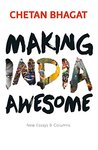
Making India Awesome by Chetan Bhagat

Making India AwesomeMaking India Awesome by Chetan Bhagat
My rating: 3 of 5 stars

Like the other book "What Young India Wants" the author has nothing revolutionary to suggest. The positive aspect is that the author believes that people will believe and follow his advice which are good on their own.
Read it if you have time on hand, otherwise you can skip it.

View all my reviews

Monday, September 12, 2016

Periyar - A Political Biography of E. V. Ramaswamy by Bala Jeyaraman

Periyar: A Political Biography of E.V. RamaswamyPeriyar: A Political Biography of E.V. Ramaswamy by Bala Jeyaraman
My rating: 4 of 5 stars

A very balanced biography of the much revered political leader of Tamil Nadu. Just like any other leader he had his good points and his warts. As the author rightly says he is neither the saint that his followers make him out to be, nor is he a demon which his detractors make him out to be. He was an ordinary man who succumbed to the normal human temptation of attempting to make the whole world see things from his point of view.

The good part was that he wanted a society where everybody is equal irrespective of caste, creed, religion or gender. Some of the stance that he took were militant, like cutting off the tufts and sacred thread of the brahmins. It is arguable if they really deserved it. And in the later part of his life he seems to have become power crazy, power to bring his dreams to reality.

The other deified leader who has been brought down to earth in this book is Rajagopalachari. Many think he was a paragon of virtue, but this book brings out the shades of grey in him as well.

A eminently readable book.

View all my reviews