 Self-enquiry by Ramana Maharshi
My rating: 4 of 5 stars
These are a translation of notes written by Ramana Maharishi himself in answer to various questions from the devotees.
It revolves around the "Who am I" which is the question that Maharishi has repeatedly asked the truth seekers to ask themselves again and again.
Not an easy read and not at all easy to practice, but one can feel the tremendous potential and value of the same.
A very good read.
View all my reviews
Showing posts with label Philosophy. Show all posts
Showing posts with label Philosophy. Show all posts
Friday, April 02, 2021
Self Inquiry by Ramana Maharishi


Rumi's Four Essential Practices: Ecstatic Body, Awakened Soul by Rumi
 Rumi's Four Essential Practices: Ecstatic Body, Awakened Soul by Rumi
My rating: 4 of 5 stars
Rumi is Rumi.
For those who understand at least a little bit of what Rumi says, and appreciates the same, this is definitely a book to be read.
It reinforces all the guidance that Rumi has provided and helps one reaffirm that one needs to awaken one's soul through loving everyone and judging none. Easily said but not easily done.
A must read.
View all my reviews
Sunday, July 19, 2020
Tripura Rahasya by Dattatreya
 Tripura Rahasya by Dattātreya
My rating: 4 of 5 stars
As complex piece of a philosophy as can be. After reading the whole book I cannot say that I understood the contents. The understanding is in parts and rest are esoteric. It will take time and multiple reading to understand major portions of the book.
It is a dense treatise and needs time to digest.
Read, but read slowly and multiple times.
View all my reviews
Monday, March 16, 2020
Immortal Talks by Shunya
 Immortal Talks by Shunya
My rating: 3 of 5 stars
Unlike the book https://chintanaigal.blogspot.com/201... of the same author, this book does not live up to the expectations. There are sections where the author seems to have lost it in trying to convince the readers that there is a scientific theory behind what is being philosophised. The book would have been much better if the author had stuck his guns rather than trying to provide a scientific reasoning for the philosophy being propounded.
The book revolves around the tribe mahtangs who are devotees of Hanuman. This is used to explain how destiny can be determined by definite action now and today and that not everything is predestined. One can "rewrite" one's destiny by having a tremendous faith in the One above and leading an ethical life.
A decent read, if one can ignore the above mentioned sections which is actually spread through the book.
View all my reviews
Immortal Talks by Shunya
Immortal Talks by ShunyaMy rating: 3 of 5 stars
Unlike the book https://chintanaigal.blogspot.com/201... of the same author, this book does not live up to the expectations. There are sections where the author seems to have lost it in trying to convince the readers that there is a scientific theory behind what is being philosophised. The book would have been much better if the author had stuck his guns rather than trying to provide a scientific reasoning for the philosophy being propounded.
The book revolves around the tribe mahtangs who are devotees of Hanuman. This is used to explain how destiny can be determined by definite action now and today and that not everything is predestined. One can "rewrite" one's destiny by having a tremendous faith in the One above and leading an ethical life.
A decent read, if one can ignore the above mentioned sections which is actually spread through the book.
View all my reviews
Friday, December 27, 2019
Vendanta: Voice of Freedom by Swami Vivekananda
 Vedanta: Voice of Freedom by Swami Vivekananda
A great book to get started on, what else, Vedanta. The sections on Karma Yoga, Bhakti Yoga, Jnana Yoga and Raja Yoga are a treat to read.
The whole book is readable. The only jarring sections are the ones where there is a comparison to Christianity. This is because many of the lectures were made in the West and it was unavoidable to avoid comparison or part discourse of Christianity.
On the whole a very good book to read.
View all my reviews
Thursday, January 18, 2018
The Seven Commandments of Bhagwad Gita by J. P. Vaswani
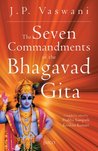 The Seven Commandments of the Bhagavad Gita by J.P. Vaswani
My rating: 4 of 5 stars
Sadhu Vaswani in his inimitable style interprets the Geetha. All of them relevant. Instead of trying to interpret or state my opinion, let me quote some of the quotes that impressed me the most.
In the beautiful words of Kahlil Gibran, “Work is love made visible.” When we do our duty in a spirit of joy and love, we grow in devotion, in pure love for Sri Krishna.
In our constant struggle with illusion and reality, the mind is our enemy: it perceives only what it wants to perceive. It is clogged with sense-impressions. And what the mind puts out – its offspring – are also tied down to material reality and the ego.
The great Spanish philosopher, Diego Y Garcia, once described a ‘specialist’ in any academic discipline as a person with a ‘painfully vast amount of knowledge in a pathetically small area of study.’
If each one of us attended to our duties in the right spirit, this world will surely be a kingdom of God! If there is chaos, confusion, anarchy, and indiscipline rampant in the world today, it is because the emphasis has changed from duties to rights. Today, everyone is claiming rights – workers, teachers, farmers, builders, investors, women, government servants, doctors, and others. Everyone is clamouring for their rights, but nobody talks of the duties that they have to attend to. I feel that if each one of us gave first priority to our duties, if each one of us fulfilled our obligations conscientiously, everybody’s rights would be automatically protected. If the employer fulfilled his duties well, the employees would have no reason to go on strike; if the men fulfilled their duties conscientiously, rights would automatically accrue to women. There would be no fight against injustice, there would be no need to struggle for equality! Let me add too, there are a hundred ways of doing the same thing. Some of these ways are right, some of these ways are wrong, but only one is the very best. We must do our duty in the best way possible, because it is our offering at the lotus-feet of the Lord. How can we offer Him the second-best or worse? How can we offer Him anything but the best?
I am saddened when young married couples, in the guise of asserting their rights, actually impose their will on each other, and erect barriers between them! If a marriage is to be successful and happy, the partners must forget about rights and do their duty. (My addition, it is important both sides adopt this principle)
To help people is in itself very good – but not to reveal your identity to your beneficiary is great!
Do not seek to serve others to prove your superiority. This brings disgrace to you, and it degrades those whom you ‘serve’ in this spirit.
Therefore, I tell my friends that when they set out to do good to others, they must practise what I call ‘the Five Fingers of Service’ : 1. Serve silently! Do not serve for show or publicity. Let the right hand not know what your left hand gives away. Do not seek to serve for name, fame, popularity, or publicity. 2. Serve humbly! Be grateful to those who give you the opportunity to serve them. You are not doing meherbani on them – they are offering you the chance to show your gratitude to the Lord, for the numerous blessings we have received from Him. 3. Serve lovingly! Do not speak harsh words to the people you serve. A sense of identification is very essential to the spirit of true service. Do not criticize or condemn others. Give and serve in the spirit of love and sympathy to all. 4. Serve unconditionally! Therefore, seek no reward for your service, nor ‘recognition’ from the world. Don’t let your service become an interference; don’t serve others with an ulterior motive – to convert them to your ideology; to force them to follow your beliefs; or to support your political party. This is not true service. 5. Cultivate the soul through service! In other words, become aware that you are only an instrument of God. He is the One Worker – you are but His tool, His agent. Therefore, renounce all idea of egoism, of the narrow Self, and become an instrument of the eternal shakti that shapes the lives of individuals and nations. I repeat, service, lokasangraha, is a God-given opportunity for the upliftment of mind and soul. Therefore, let us serve others in the spirit of serving God.
A very good read.
View all my reviews
Wednesday, January 11, 2017
Rare Books Beloved by Ramana Maharishi by Roy Melvyn
 Rare Books Beloved by Ramana Maharshi by Roy Melvyn
My rating: 5 of 5 stars
A very nice book. Has a collection of philosophical treatise from Hindu Philosophy. One of the books is Tripura Rahasya. This is the largest book in the set of books. The others being Advaita Bodha Deepika, and Siddha Gita.
All of them are good, but Tripura Rahasya is the best of the lot. Read it and get peace of mind and if you are good enough "Get Enlightened".
View all my reviews
Thursday, December 22, 2016
My Gita by Devdutt Pattanaik
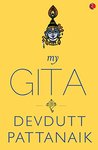 My Gita by Devdutt Pattanaik
My rating: 5 of 5 stars
A wonderfully different but very sensible interpretation of Bhagwad Geeta. Difficult to summarize the book so some excerpts from it. For an expansive tearing to shred of this book see this critical analysis by Nityanand Misra.
Vishnu establishes balance between Ramayana and Mahabharatha. Example of "Karma"?
When Vishnu descended on earth as Ram, he killed Vali, the son of Indra, and sided with Sugriva, the son of Surya. So when Vishnu descended as Krishna, he was obliged to restore the balance in the cosmos by killing Karna, son of Surya, and siding with Arjuna, son of Indra. Here one story is one half of another story, and Karna's misfortune neutralizes his fortune in another life. Free of any obligations or expectations, he would thus be liberated from the wheels of rebirth. So his killing, which we feel is a sad incident, becomes a wonderful event."
In the third story, when Vishnu descended as Parashurama, he trained Bhishma, Drona and Karna, who ended up siding with the Kauravas and upholding adharma. Since he could not kill his own students, Vishnu again descended as Krishna and supported the Pandavas, who fought and killed the Kauravas and their commanders. Here Krishna is reborn to correct the errors of a previous life, one of them being Karna.
"The journey from human to divine is to achieve conceptual clarity and appreciate the world as it is, while empathizing with how others perceive it."
From fear of death comes hunger, hence the quest for food, hence violence. Fear of death by violence makes animal sexual, so that they reproduce and ensure that at least some part of their being outlives death. And that which is reproduced carries with it the fear of death, hence hunger, hence violence and sex. Thus, cause is an action (karma) and the consequence is also an action (karma). Karma is both action and reaction.
Karma - Each moment is a fruit (karma-phala) of the past and a seed (karma-bija) of the future. And just as every seed need not germinate, just as quality of the fruit depends on various external factors like sunlight and quality of soil and availability of water, the reaction of every action is unpredictable. With unpredictability comes uncertainity, which amplifies fear"
The acceptance of uncertainity is the hallmark of mythologies that believe in rebirth. Here, the world is always changing and so the point is to observe it, rather than judge or control it.
"Those who believe in Karma do not blame. They do not judge. They accept that humans live in a sea of consequences, over which there is limited control. So they accept every moment as it is supposed to be. They act without expecation. This is nishkama karma".
To empathize is dharma. Failure to empathize is adharma.
"Arjuna, in age after age, whenever humanity forgets its potential and functions as it should not, I manifest to inspire those with faith and shake up those without faith, so that humanity never forgets that it is capable of". A completely different perspective of "Yada Yada hi dharmasya"
Animals have no choice but to follow their instinct. Humans have a choice. When we do exercise our choice, when we value other people's needs alongside our own, we are following dharma. When we stay focussed on our own needs at the cost of others', we are doing adharma.
Everyone is born with a different capability (varna): some advise the society (Brahmins), some protect the society (Kshatriyas), some feed the society (Vaishyas) and some serve the society (Shudras). Everyone has to go through different stages of life (ashrama): a student (brahmacharya). a householder (grihasta), a retired person (vanaprastha), and a hermit (sanyasa). The Puranas tell us that society is constantly changing; every culture goes through four phases (yuga) moving from innocence (Krita) to maturity (Treta) to struggle (Dvapara) to decay (Kali).
How does one uphold dharma in different contexts?
Typically people come up with rules - traditions (riti) and laws (niti), and equate them with adharma. Compliance then becomes dharma and non-compliance becomes adharma. But things are not so simple. "What matters more than action itself is intent, which is not tangible, hence rather invisible." Rules vary with context.
In Ramayana Vishnu is the first born in a Royal family and is hence expected to follow the the rules of the family, clan and kingdom, and uphold family honour. Krishna the youngest born of a noble family, raised by cowherds is under no such obligation. He asks Arjuna to concentrate on his dharma (sva-dharma) and not on somebody else's (para-dharma).
In Ramayana Rama upholds rules, while Ravana breaks them. In Mahabharatha Duryodhana upholds rules, while Krishna breaks them. As the eldest sons of their respective clans, Ram and Duryodhana are obliged to uphold rules. Ravana, son of a Brahmin, and Krisna, raised by cowherds, are under no such obligations. Dharma, however is upheld only by Ram and Krishna, not Ravana and Duryodhana. Ram is constantly concerned about his city Ayodhya's welfare, while Ravana does not care if his Lanka burns. Krishna cares for the Pandavas, who happen to be the children of his aunt, but Kauravas do not care for the Pandavas, who happen to be children of their uncle. Dharma thus has nothing to do with rules or obligations. It has to do with the intent and caring for the other, be it your kingdom or family.
Ravana argues his case passionately, as do those who fight on the Kaurava side, from Bhishma to Drona, Karna and Shalya. They justify their actions on the grounds of justice, fairness, legitimacy, duty, loyalty, fidelity and commitment. None of them sees the other (para); they are too blinded by the the self (aham). Logic serves as a lawyer to defend their stance.
While Ravana and Dhuryodhana judge, Ram and Krishna never do so. They never complain or justify.
In Puranic lore, he who gives upon getting is a deva; he who seeks retrieval of what he thinks has been stolen is an asura; he who grabs, takes without giving, is a rakshasa; he who hoards is a yaksha! He who does not participate in yagna, does not give or want to get, is a shramana or tapasvi, the hermit, much feared in Puranas as the cause of drought, hence starvation. Within us is the yajamana, the devata, the asura, the rakshasa, the yaksha and the shramana. They manifest in different directions.
Exchange can be used to satisfy our desires, or repay our debts. It can entrap us, or liberate us. It depends not on the action, but on the thought underlying the action.
Sankhya means enumeration and refers to analysis, the tendency to break things down into their constituent parts. Yoga is its complement and refers to synthesis, the tendency to bind parts to establish a composite whole. In art, sankhya is visualized as an axe (parashu), use to slice things into parts, while yoga is visualized as a string (pasha), used to tie things together.
With yama we limit social engagements by not indulging in sex, violence, falsehood, theft and greed.
Then, with niyama, we discipline ourselves by practising cleanliness, contentment, austerity, reflection and having faith in divinity.
Third comes asana, where we activate the body using various postures
Fourth is pranayama, through which we regulate the breath.
With prayahara, we withdraw from sensory inputs.
With dharana, we become aware of the big picture and gain perspective.
With dhyana, we become attentive and focussed.
With samadhi, we go further within experience our emotions and discover fear!
Connecting with other is not easy, especially when we look upon each other as predator and prey, rival or mate. In such a situation we trust no one but ourselves, as animals tend to. Or we trust the other only in situation of extreme helplessness, as only humans can.
The earliest word for God in Rig Veda is 'ka', which is the first alphabet in Sanskrit, from which come all the interrogative pronouns such as what, when, where, why, how. Thus, divinity had something to do with inquiry. The kavi, or poet, enquired about ka. He later came to be known as the rishi, the observer.
Between survival and understanding comes judging - the state when everything and everyone around is evaluated based on imagined benchmarks, in order to position oneself. The animal wants to identify the other as predator or prey, rival or mate. The judge wants to classify the world as good or bad, innocent or guilty, right or wrong, oppressor or oppressed, based on his or her own framework. The observer wants to figure out what exactly is going on. The journey from animal to judge to observer is the journey if va-nara, to nara, to Narayana.
Arjuna, he who sees the divine as present equally in all things does not hurt himself by hurting others and so attains the ultimate state.
Arjuna, he who does not hate anyone, is friendly and compassionate always, is not possessive and self-indulgent, stable in pleasure and pain, forgiving, contained, controlled and firm in his love for me, in heart and head, is much loved by me.
In nature, there is a pecking order. But animal domination is not aspirational; it is necessary for survival. Domination ensures they get access to more food. Humans dominate to grant themselves value, and feel good about themselves.
Maya distracts us from infinity and immortality, from the feeling that the world can continue without us. Maya makes us feel important.
We cannot measure infinity, but we can lock infinity in a symbol. Thus in temples, a rock (pinda, linga) or a fossil (shaligrama) can represent the formless divine. It is our imagination that gives value to things, purpose to an activity and identity to a thing. We can give meaning or wipe it away. That is the power of maya. It is the power of God bestowed upon us humans. Maya is often called magic, for it has the power to make the world meaningful, transform every word into a metaphor, every image into a symbol. Maya can divide and separate, cause conflict by comparison.
When people say in Hindi "Sab maya hai", it is commonly translated as "The world is an illusion or a delusion". What it means is that the world can be whatever we imagine it to be - valuable or valueless, fuelling ambition or cynicism.
We can manufacture depression and joy in our lives by the way we measure, delimit and apportion the world. The world itself has no intrinsic measurement.
In nature, there are natural forces of attraction and repulsion, even between two objects. Plants and animals are drawn to food, and shun threats. Over and over this, humans cling (raga) to property (kshetra) that grants them value in society. We convince ourselves that our social body defines our identity. To be told that our true identity is intangible and immeasurable (kshetragna) seems quite unbelievable, as it can never be proven, only believed. So we cling to our goals or rules, to property or relatives, to titles or ideas, and fight over them as animals fight over territory. Animals fight because the survival of their body depends on it. Humans fight as the survival of their identity (aham) depends on it. Clinging is comforting. Insecurity fuels desire (kama) for more, and so acquiring more becomes purpose of life. We get angry (krodha) when we don't get them, get attached (moha) to them, become intoxicated with pride (mada) because we possess things, feel jealous of those who have more and insecure around those who have less (matsarya). Material reality thus enchants us and crumples our mind several times over. These are called six obstacles (arishad-varga) that prevent the mind from expanding, the aham from transforming into atma and discovering bhagwan.
We also shun (dvesha) things out of fear. We avoid taking ownership, responsibility or proprietorship in fear. We are terrified of heartbreak, and so refuse to fall in love. We are terrified of failing, and so avoid struggles. We are terrified of outcome, and so refuse to take any action. We clearly demarcate what is mine and what is not mine. If attraction to things makes us householders, and revulsion of things makes us hermits, then neither is actually wise, as neither accepts reality. As householders, we wish we expand the mine, sometimes at the cost or yours. As hermits, we want to shun even what is mine and reject all that is yours.
Reality is allowing things to come to us naturally and not seeking things that do not come to us naturally. Wisdom is bearing the fruit we are supposed to bear and not wanting to bear the fruit that we cannot bear. Depending on its guna, a tree bears mango fruit; this is not ambition or desire, it is simply realization of potential. If we expect a mango tree to bear apples, then problems start. We do not respect guna. A human being can become a king, a warrior, a merchant, a servant or a poet depending on his qualities and potential. If we try to change a warrior into a poet because we are revolted by war or attracted to poetry, then we cause tension and suffering. Hinduism therefore does not talk of conversion, only realization of potential. To let our potential be realized without deriving our identity from it, or without denying its existence, is the hallmark of wisdom.
Gajendra the elephant is caught by a crocodile and Gajendra tries to escape in vain, as no one comes to his rescue. Lost, helpless, he prays to Vishnu who appears and strikes the crocodile away. This is a metaphor for a mind consumed by passion, seeking gratification in the material world and suddenly finding the world turning against it, becoming even more hostile. The solution is not to fight harder, for that only leads to crocodile tightening its grip. The solution is to stop fighting and have faith that another force will intervene.
In the story, Gajendra chooses to see himself as a victim and the crocodile as a villian. If he wins, he will be hailed as a hero and if he loses he still be hailed as a martyr who died trying. But the observer can see that the crocodile is no villain; it looks upon Gajendar either as threat, or a food. The crocodile's violence is not violation. Gajendra sees it as a violtion, as he is in a state of mada, seeing himself as the king of elephants, master of all the cow elephants, loved and feared by all, and not as an animal, prey to a predator. Rather than imagining violation, being heroic or acting like a martyr, Vedic wisdom suggests that we recognize maya, moha and mada at work, stop struggling over imagined boundaries, and have faith that life is shaped by many other forces, not just the ones we have control over.
As long as we don't have faith, we carry the burden of solving all problems. We will be impatient and fight and cling. Wisdom is enjoying things that drift away, like watching the waves drift in and out of the breach.
Rama is considered the greatest king, as he was more concerned about his kingdom and his family's reputation than his personnal happiness. Krishna is considered the greatest kingmaker, as he shows the Pandavas that war is not about vengeance or ambition, it is about governance.
Unlike the independent Shiva made dependable by Shakti, Vishnu displays vulnerability and dependance on other others when descends as Ram and Krishna, for other also wants to feel powerful and valued, and this can happen only when self 'consumes' the other. I want you to need me. If you do not need me, and only give me, without taking anything from me, I feel inadequate, meaningless, valueless and purposeless. In wanting me, you illuminate me and contribute to my fulfillment. Likewise, you want me to need you. If I do not need you, if I am dependable but detached, you will feel insulted, hurt, unwanted, and I will appear patronizing.
Krishna to Yudhishthira "Yudhishthira, hear what Kama, god of craving, says about himself. He who seeks to destroy craving with weapons ends up craving those very weapons. He who seeks to destroy craving with charity ends up craving charity. He who seeks to destroy craving with scriptures ends up craving scriptures. He who seeks to destroy craving with truth ends up craving truth. He who seeks to destroy craving by austerities ends up craving austerities. He who seeks to destroy craving with renunciation ends up craving renunciation. Craving cannot be destroyed, but it can be put to good use by locating it in dharma. So seek to destroy by with the pursuit of dharma. You will end up craving dharma! And that will be good for the whole world, for you will then conduct more and more exchange, bring prosperity to the world, liberating yourself in the process from all obligations, enabling others to give without expectations."
In Western philosophy heros try move the world from "imperfection" to "perfection" and hence the terms like redeemer and saviour are frequently used. The Eastern philosophy concentrates more on the individuals victory over the baser instincts and movement towards understanding of universal unity.
"The yearning for perfection stems from the desire to control and organize the world to our taste, to create a cocoon where everything makes sense to us. It demands that we judge the world as a problem that needs fixing, chaos that needs to be organized, a disease that needs to be cured, a polluted space that needs purification. It assumes that the world needs to have a climax, a happy ending, or else life is a tradegy. These are typical of finite narratives, where there is only one life to lead". This underlies most of the Western Philosophies. The Eastern Philosophy on the other hand gives mutliple chances to redeem oneself and gain oneness with the only ONE.
The summaries from the end of each of the chapters
You and I do not have to judge
Do you seem me as a hero, villian or victim? If yes, then you are not doing darshan. If you can empathize with the fears that make people heros, villians and victims, then you are doing darshan. For then you look beyond the boundaries that separate you from the rest.
You and I have been here before
This life is not the first time you and I have experienced each other. We have been here before, but we have not learned, from past experiences, that much of life defies explanation and control, that life always offers a second chance and that the world existed before us and will continue to exist after us. As long as we resist reality, we will not discover the immortal, and go from lifetime to lifetime, hungry for meaning and validation.
You and I experience life differently
My deha is different from yours. My hungers are different from yours. My assumptions are different from yours. My capabilities are different from yours. My experiences are different from yours. My expressions are different from yours.
You and I seek meaning
Plants and animals, including humans, seek food. Additionally, humans also seek meaning: the dehi within the deha, the meaning within the word, the soul within the body, the metaphorical within the literal.
You and I have to face consequences
I want to control your actions and reactions. You want to control my actions and reactions. We want to control the world around us, make it predictable. To act is karma. Karma Yoga is when we act without seeking control over the outcome.
You and I can empathize
Dharma is more about empathy than ethics, about intent rather than outcome. I follow dharma when I am concerned about your material, emotional, or intellectual hunger. I follow adharma when I focus on my hunger at the cost of yours.
You and I can exchange
To do yagna is to recognize that we live in a sea of assumed expectations and obligations. You and I can hoard, grab, give in order to get, get before giving or simply withdraw from the exchange. We can act out of desire, duty or care. We can choose to expect or control outcome or not.
You and I withdraw in fear
A yogi looks within to appreciate the mind that occupies the body, the thoughts that occupy the mind, the fears that occupy the thoughts, the opportunities and threats that occupy the fears, and the fears of the others that occupy those opportunities and those threats.
You and I hesitate to trust
We all ride the waves of fortune and misfortune. If you and I believe we alone control the waves, then we are asuras. If you and I feel entitled in fortune and remember God only in misfortune or in fear of misfortune, then we are devas. We are not yet in touch with the atma within and without.
You and I have potential
I want you to be bhagwan: see my slice of reality, my insecurity and my vulnerability, and comfort me, without making me feel small. You have that potential. So do I. If not your and I, then surely there is somebody else.
You and I can include
When I feel that you acknowledge, appreciate and accommodate my worldview, rather than dismissing, tolerating, adoring or even following it, I know you are expanding your mind and walking the path of brahmana.
You and I can accommodate
Sometimes, you can see more than me, but you pretend to know less so that I don't feel intimidated by you. I do the same for you. We do not feel superior when other is vulnerable; or inferior when we feel helpless. This is waht sustains our relationship.
You and I have no control
We are all a masala box of guna, with one guna dominating at different times. We can all be lazy, assertive or detached or engaged. Yoga makes us aware of the guna at work.
You and I value property
You may value me for what I have and what I do. But I am not what I have or what I do. If you love me, focus on who I am: my hungers, and my fears, and my potential to focus on who you are.
You and I compare
Do you derive your identity by comparing yourself with me? This is maya, a necessary delusion without which society cannot function. It can uplift you with inspiration, depress you with jealousy or grant you peace by revealing how different you are from me.
You and I cling
There is no violation in nature. Only violence. Violation follows when we grant meanings to things and derive our identity from them. We are attached to property as long as we are dicsonnected from atma.
You and I can be generous
Am I aware of my fears that make greedy, stingy, and controlling? What stops me from being generous materially, emotionally and intellectually? Liberation, essentially, is letting go of our insecurities that disconnect us from others.
You and I matter to each other
Can you and I participate in a relationship without seeking to control the behaviour of the other? Can we help each other outgrow our hungers and fears? Then we are on the path of brahma-nirvana. When we derive joy from within, not from achievements outside, we are on the path of atma-rati.
View all my reviews
Wednesday, December 23, 2015
Collected Works of Ramana Maharishi
 Collected works of Ramana Maharshi by Ramana Maharshi
My rating: 5 of 5 stars
A wonderful book about various writings from Ramana Maharishi, the silent sage from Thiruvannamalai. The silent saint has written some manuscripts like Ulladu Narpadhu and has translated works of others like Adi Shankaracharya into Tamil.
This book is a collection of manuscripts authored by Ramana Maharishi and his translations. It a very good book to read to understand that thoughts of this silent sage. His philosophy is one of introspection. Mindful meditation is what he suggests. Just observe what you are doing and do not react to situations. This is the message he gives repeatedly in each translation.
The translations of Atma Sakshatkara (an exposition of philosophy by Shiva to his son Shanmukha) and Devikalottara (an exposition of philosophy by Shiva to his consort Parvati) were the highlights for me. Completely blew my mind apart.
Read the book to understand the true philosophy of Hinduism.
View all my reviews
Friday, October 16, 2015
A Series of Lessons in Raja Yoga
 A Series of Lessons in Raja Yoga by William W. Atkinson
My rating: 3 of 5 stars
The book is mainly about the Eastern way of meditation. Each chapter introduces the reader to a higher concept. It starts with exercises to improve concentration and slowly leads the readers on a self discovery path. It speaks about how the EGO should be the controller of the mind and not the other way round. The book hints at higher aspects of how all the EGOs are one, but does not delve as much in depth.
A good read for somebody wishing to get a perspective on Eastern philosophy of discovering oneself.
View all my reviews
Friday, December 06, 2013
The Fifth Mountain by Paulo Coelho
 The Fifth Mountain by Paulo Coelho
My rating: 4 of 5 stars
Another good read from Paulo Coelho. The book is about how the inevitable happens. One does not realize immediately as to why the "unavoidable" happens and one feels bad. But what one should do is try to understand the lessons from the "unavoidable". This in short is the premise of the book.
The books is based in an era when a Phoenician princess has enamored and married an Israeli king. She is trying to convert the whole of Israel to start worshiping Baal and the rest of the Phoenician deities. In the process the prophets of Israel are being persecuted and being put to death by the Israeli army at her command.
Elijah is one such prophet. He manages to escape to Akbar one of the settlements of the Phoenicians. Initially he is admitted into the community, despite the fact that he is an usurper trying to oppose their princess and non believer in their gods, due to their age old maxim of treating their guest well. The governor of the community keeps him saying that they will extract a ransom for his head from their princess. He stays with a widow as was predicted by his angel on his way from Israel.
Soon he wins the hearts of the people of Akbar and that of the governor too while he manages to ire the high priest who in turn poisons the commander of the army against him. In the meantime the high priest is also worried about the spread of Byblos which is new and easy writing methodology that has been introduced to the world. The high priest is worried that the rituals that only he is privy to now would soon become public knowledge and he would lose his power over the people as now everybody would start performing the rituals. Elijah is all for propagation of the writing technique and this furthers the ire of the high priest.
The widow's son suffers from an illness and dies. The priest uses this opportunity to try and drive Elijah out of Akbar. He blames the death of the boy on Elijah. Elijah who has fallen in love with the widow is made to climb the Fifth mountain where it is expected that the fires of the gods would destroy anybody who climbs it. The rule is that if they manage to come back they will be executed by the guards at the foothills of the mountain. Elijah climbs up and meets his angel who gives him the method to bring back the boy to life. He comes down and asks the guards for a last chance to try and revive the child. The high priest allows him the chance and he manages to bring back the boy to life. This endears him further to the widow and earns him more respect from the community.
Soon the Assyrians are seen setting up camps outside Akbar. It is known that their intention is to attack and decimate the community. While Elijah is trying to convince the governor not to go to battle, the high priest provokes the ego of the commander and ensures that there is a war. Elijah is told by his angel that he can perform one more miracle and that he can either use to top stop the war or to free his people from the tyrannical rule of the Phoenician queen. He decides to use it for the latter after a great internal battle. The day the widows declares her love for Elijah and he for her, the war breaks out and practically the entire community is wiped out. The widow is one of the casualty of the battle while the boy survives.
Elijah first tries to go back to Jerusalem, but he is stopped by his angel. He goes back to Akbar and with the help of the community which now consists mainly of the old people and the children, builds back Akbar to almost its formal glory. He is made the governor and is respected by one and all.
At the appropriate time he goes back to Jerusalem and frees his people form the tyranny of the Phoenician queen by performing the miracle that has been granted by his angel.
There are a lot of great words of wisdom strewn throughout the book. Here are a few of those.
"It was then as he discovered that death could elude him that the fear of death returned. There was still a possibility of seeing the ocean, of finding a wife, having children, and completing his work in his shop".
Our souls are prisoners of the terror of death.
Every man has a right to doubt his task, and to forsake it from time to time; but what he must not do is forget it. Whoever doubts not himself is unworthy - for in his unquestioning belief in his abilty - he commits the sin of pride. Blessed are those who go through moments of indecision.
Souls too, like rivulets and plants, need a different kind of rain: hope, faith, a reason to live. When this did not come to pass everything in that soul died, even if the body went on living; and people could say "Here this body was once a man".
Freedom is to feel what the heart desired, with no thought to the opinion of the rest.
The Lord hears the prayers of thoese who as to put aside hatred, but He is deaf to those who would flee from love.
"Can a man cast from his heart the pain of a loss?" "No, but he can find joy in something won".
Tragedies do happen. We can discover the reason, blame others, imagine how different our lives would have been had they not occurred. But none of that is important: they did occur and so be it. From there onward we must put aside the fear that they awoke in us and begin to rebuild.
For many generations, man tried to impose their will by force; the spoke of what they wanted but cared not what the people thought - and all those empires have been destroyed. Our people have grown because they learned how to listen; this is how we developed trade - by listening to what the other person desires and doing whatever was possible to satisfy him. The result was profit.
"There is no tragedy only the unavoidable. Everything has its reason for being: you need only distinguish between the temporary and what is lasting." "What is temporary?" "The unavoidable". "What is lasting?" "The lessons of the unavoidable".
If you have a past that dissatisfies you, forget it now. Imagine a new story of your life, and believe in it. Concentrate only on thse moments in which you achieved what you desired and this strength will help you to accomplish what you want.
A child can always teach an adult three things: to be happy for no reason, to always be busy with something, and to to know how to demand with all her might that she desires.
Every human being at sometime had tragedy enter his life; it might be the destruction of a city, the death of a son, an unprovoked accusation, a sickness that has left one lame forever. At that moment God challenged one to confront Him and to answer His question "Why do you cling fast to an existence so short and so filled with suffering?. What is the meaning of your struggle?" The man who did not know how to answer this question would resign himself, while another one who sought a meaning to existence, feeling that God had been unjust, would challenge his own destiny. It was at this moment that fire of a different type descended from the heavens - not the fire that kills, but the kind that tears down ancient walls and imparts to each human being his true possibilities. Cowards never allow their hearts to blaze with this fire; all they desire is for the changed situation to quickly return to what it was before, so that they can go on living their lives and thinking in their customary way. The brave, however, set a fire to that which was old and even at the cost of great internal suffering, abandon everything, including God and continue onward. "The brave are always stubborn". From heaven, God smiles contentedly, for it was this that He desired, that each person take into his hands the responsibility for this life. For in the final analysis, He had given his children the greatest of gifts; the capacity to choose and determine their acts. Only those men and women with the sacred flame in their hearts had the courage to confront Him. And they alone knew the path back to His love, for they understood that tragedy was not punishment but a challenge.
Everythat that could have happened but did not is carried away with the wind and leaves no trace. Life is made of our attitudes. And there are certain things that the gods oblige us to live through. Their reasons for this does not matter, and there is no action we can take to make them pass by.
God was infinite in his mercy, and implacable in His severity with those who lacked courage to dare.
Children are able to overcome what took place because they have no past - for them everything that matters is only the present.
He had fled from doubt, from defeat, from moments of indecision. But the Lord was generous and had led him to the abyss of the unavoidable, to show him that man must choose - and not accept - his fate.
"Is it always necessary to leave". "It is always necessary to know when a stage of one's life has ended. If you stubbornly cling to it after the need has passed, you lose the joy and meaning of the rest. And you risk being shaken to your senses by God."
View all my reviews
Friday, August 19, 2011
Seven Blunders of the World
I am not a very big admirer of Gandhi. But there are certain aspects that I cannot help admire. Here is one of them. Read the link http://en.wikipedia.org/wiki/Seven_Blunders_of_the_World for more details.
[edit]
- Wealth without work.
- Pleasure without conscience.
- Knowledge without character.
- Commerce without morality.
- Science without humanity.
- Worship without sacrifice.
- Politics without principle.
[edit]How true each one is. Nobody will doubt it. But I doubt if many follow it. Very relevant in today's world filled with corrupt politicians who only claim to be followers of Gandhi. The only connect, if at all they have, is the cap popularized by Gandhi.Read the book given below. Extremely candid autobiography of himself. Not many would admit to things that he has admitted in this book.
Wednesday, August 10, 2011
Thursday, July 28, 2011
The Journey Home - Autobiography of an American Swami

My rating: 3 of 5 stars
The book is about an American from the hippy culture who wanted to break away from convention. He is into Rock and Roll and Acid and everything that epitomized his generation. He left for Europe against the wishes of his parents and during his travels in Europe he got his calling came. He was only 19 years old, he left all of that and left India on foot, traveling across the European and Asian continent to reach India via Pakistan.
He gets into India after much pleading because of the kindness of a Sikh immigration officer. He then travels to the Himalayas and meets various Gurus and experiences the path followed by each of them. He is not convinced to join any of them although he sees their spirituality, their kindness and their sincerity in what they are doing. He also come across a few bogus guru who are Gurus only for their selfish gains.
Finally he finds his Guru in Srila Prabhupada of ISKCON in Vrindavan. He is now a part of the organization and goes around helping others follow the path of Bhaktivendanta.
It is a good book to read. There is no doubt about the experiences that author has had during his travels, but some scenarios seem to be contrived and there seem to be too much of coincidences for a "rational" thinker to accept.
View all my reviews
Subscribe to:
Posts (Atom)